Opportunity Management Guide
Track qualified sales deals from initial discovery through to close. Understand how to use the opportunity pipeline to manage revenue, priorities, and win rates.
Managing your sales pipeline
An opportunity represents a qualified sales deal. Unlike a lead, which is an unqualified prospect, an opportunity has been assessed and is worth active pursuit. Opportunities link to accounts, contacts, decision makers, service offerings, and estimated values.
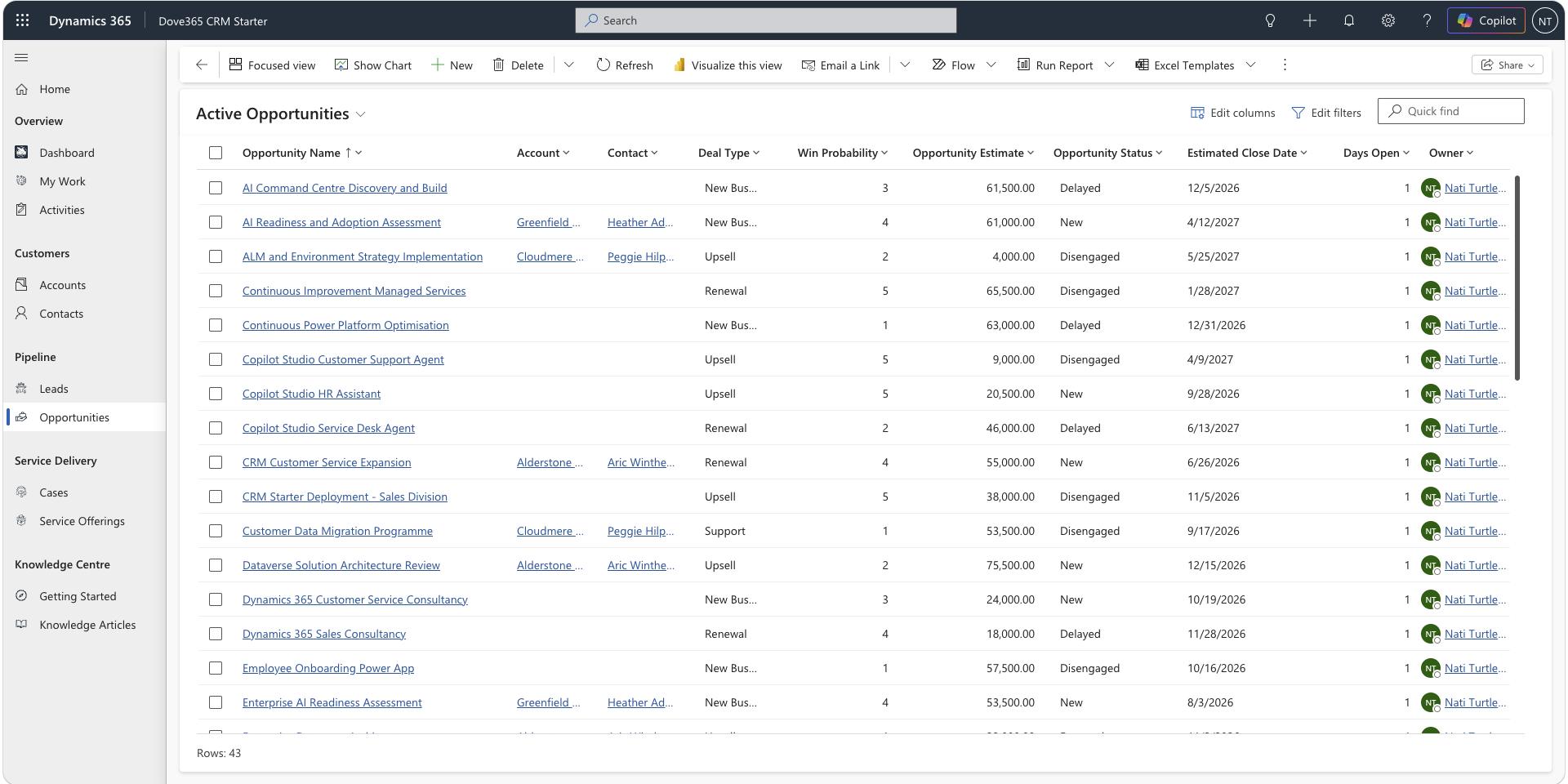
Linked to your customer data
Every opportunity is connected to an account and a contact. You always know which organisation and person the deal relates to — and who the decision maker is.
Service offerings attached
Add one or more service offerings to each opportunity. This structures your pipeline reporting by service type and gives management meaningful visibility into what you’re selling.
Estimated and actual value
Track estimated revenue before close and actual revenue on win. Pipeline value reporting draws from these fields across all open opportunities.
Win and loss tracking
Every opportunity closes as Won or Lost, with the reason recorded. Over time this builds the foundation for pipeline analysis and sales process improvement.
Key opportunity fields
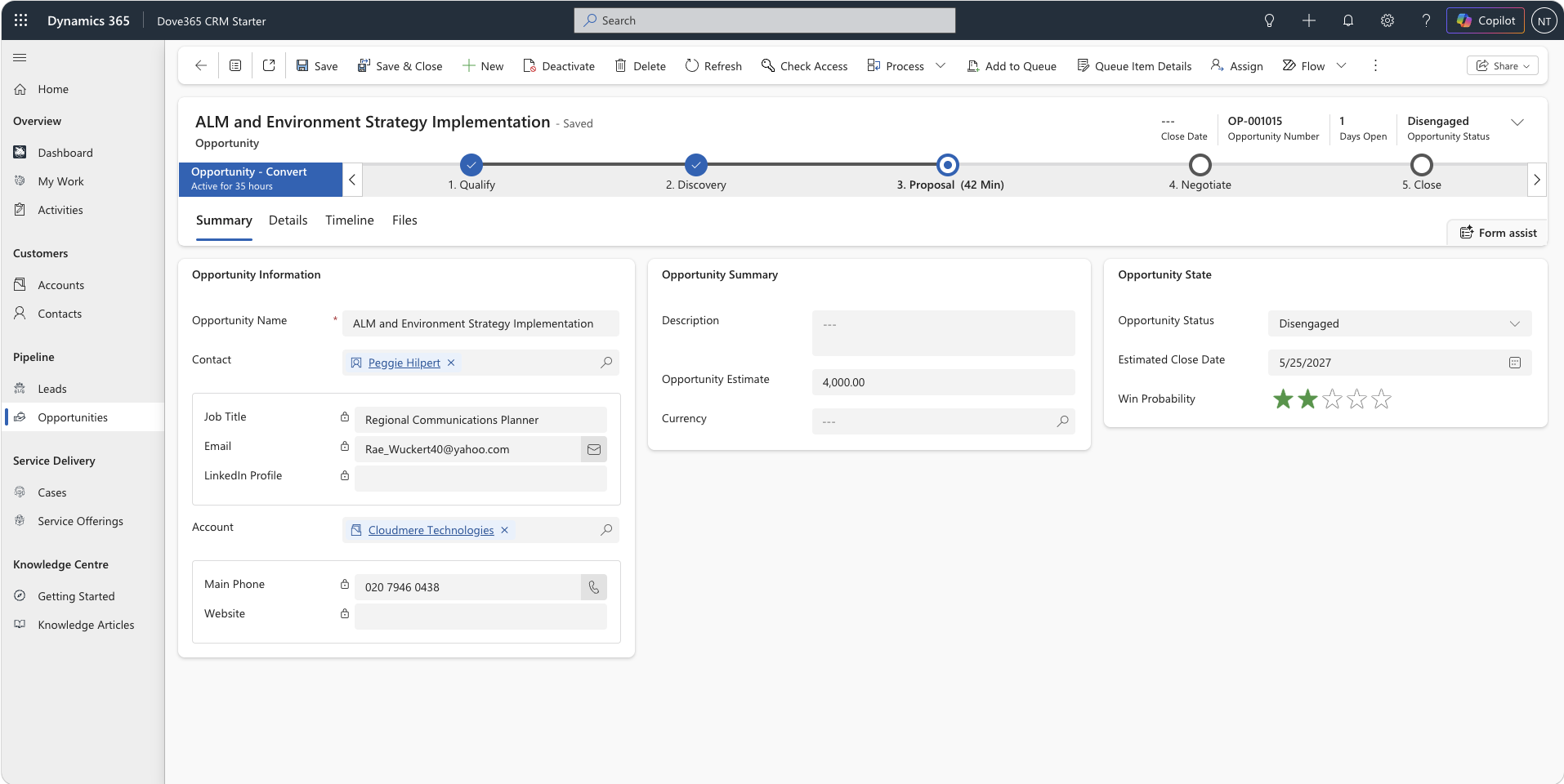
Five stages from qualification to close
Dove365 CRM — Starter uses a five-stage business process flow for opportunities. Each stage has specific fields to complete before progressing, ensuring your team captures consistent, reliable data.
Qualify
Confirm the opportunity is worth pursuing. Record account, contact, decision maker, estimated value, source, and priority.
Discovery
Understand the customer’s need. Confirm budget and timeline. Record what you’ve learned about the business problem and what success looks like.
Proposal
Document the proposed solution. Record proposed amount, win probability, proposal sent date, and any competitor context.
Negotiate
Track final discussions. Note approval required, confirm close date, and keep opportunity status current as negotiations progress.
Close
Mark the outcome as Won or Lost. Won: record actual revenue. Lost: record the reason. Closing updates reporting automatically.
Understanding your pipeline
Pipeline management is about maintaining an accurate, up-to-date view of all active deals so you can make informed decisions about priorities, resources, and revenue forecast.
Keep opportunities current
A pipeline is only useful if the data is accurate. Update stage, status, probability, and close date regularly. A stale pipeline leads to poor decisions and unreliable forecasting.
Use service offerings consistently
Attaching service offerings to every opportunity means you can break down your pipeline by service type, revealing where your strongest revenue mix comes from and which services win most.
Track wins and losses equally
Recording close reasons for every lost deal over time reveals patterns — whether you’re losing on price, timing, competitor offering, or fit — so you can improve your approach.
Day-to-day opportunity management
Continue learning
Lead Management
Understand how leads feed into your opportunity pipeline — from first contact through qualification and conversion.
Case Management
Manage support requests and service enquiries after the deal is won, using Dove365 CRM — Starter’s case management module.
Activity Tracking
Log calls, emails, and tasks against opportunities. Understand how the timeline builds your complete deal history.
Ready to see Dove365 CRM — Starter in action?
Book a free demo and see how Dove365 CRM — Starter can work for your business inside Microsoft 365.